Recently in OIl and Gas News Category

April 8, 2013

News in the Oil Patch

Range Resources

Range Resources' battle with the Lipskys and Alisa Rich continues, now in a confusing appeal of the trial court's order denying the Lipskys' and Rich's motion to throw out Range's counterclaim under the Texas law prohibiting so-called Strategic Lawsuits Against Public Participation, or SLAPPs.  http://www.star-telegram.com/2013/04/02/4745433/appeals-judges-return-range-suit.html

Earthquakes and Disposal Wells

Earthquakes caused by disposal wells continue to make the news.

http://www.fool.com/investing/general/2013/04/02/1-big-risk-that-has-energy-companies-quaking.aspx 

http://news.yahoo.com/oil-addiction-not-fracking-caused-2011-oklahoma-earthquakes-172400184.html 

http://www.bloomberg.com/news/2013-03-26/oklahoma-earthquake-in-2011-tied-to-wastewater-wells-in-fracking.html 

RRC figures show that wastewater pumped into disposal wells in Texas increased from 46 mllion barrels in 2005 to nearly 3.5 billion barrels in 2011.

http://www.bizjournals.com/dallas/news/2013/03/27/company-that-recycles-fracking-water.html?ana=twt

Oil Spill Trial

The huge trial to determine liability for the 2010 Gulf of Mexico oil spill continues. The judge threw out all claims against Cameron, the maker of the blowout preventer on the well, finding no evidence to support any claim against it. http://fuelfix.com/blog/2013/04/03/gulf-oil-spill-judge-throws-out-remaining-claims-against-cameron/

Keystone Pipeline

Here is a good article from the Washington Post explaining the facts and politics of the Keystone Pipeline.  http://www.washingtonpost.com/blogs/the-fix/wp/2013/04/03/the-keystone-xl-pipeline-and-its-politics-explained/

CSSD Performance Standards

A coalition of exploration companies and environmental organizations has created a new orgainzation and published performance standards for drilling and fracturing horizontal wells in the Marcellus. The new organization, the Center for Sustainable Shale Development, includs as partners the Environmental Defense Fund, Chevron, the Clean Air Task Force, Consol Energy, Shell, the Pennsylvania Environmental Council, and others. The Center's website is http://037186e.netsolhost.com/site/.  Its new performance standards are here:  http://037186e.netsolhost.com/site/wp-content/uploads/2013/03/CSSD-Performance-Standards-3-27-GPX.pdf  They include best practices for protecting water resources and eliminating use of fresh groundwater and surface waters in hydraulic fracturing; recycling of flowback and produced water; use of closed-loop systems for drilling fluids; best practices for casing and cementing of wells; reduction of venting or flaring of gases in the drilling process; emissions standards for pumps and motors used in drilling. Other companies are being encouraged to sign onto the goals of the standards.  See http://www.forbes.com/sites/raphaelbostic/2013/04/04/the-marcellus-agreement-please-frack-responsibly/ 

In West Texas, companies are increasingly using brackish water for fracing.

http://www.texastribune.org/2013/03/28/brackish-water-fracking-rising-amid-challenges/?utm_source=texastribune.org&utm_medium=alerts&utm_campaign=News%20Alert:%20Subscriptions 

There are increasing complaints about air quality in the Eagle Ford.

http://sacurrent.com/news/the-sour-side-of-life-in-south-texas-39-eagle-ford-shale-1.1463271?pgno=5 

And confusion reigns among Texas groundwater districts about if and how to regulate groundwater pumping for frac water. 

http://www.texastribune.org/2013/03/13/fracking-groundwater-rules-reflect-legal-ambiguiti/

Meanwhile the Obama administration has issued new proposed rules for hydraulic fracturing on public lands:

http://www.nytimes.com/2012/05/05/us/new-fracking-rule-is-issued-by-obama-administration.html?_r=0 

http://www.forbes.com/sites/christopherhelman/2012/05/04/new-federal-fracking-rules-look-reasonable-enviros-not-satisfied/

The Top Five Facts Everyone Should Know About Oil Exploration

Another good article from Forbes:  http://www.forbes.com/sites/quora/2013/04/03/what-are-the-top-five-facts-everyone-should-know-about-oil-exploration/  Did you know that about 40% of all seaborne cargo is oil? Also see http://www.instituteforenergyresearch.org/2010/02/16/a-primer-on-energy-and-the-economy-energys-large-share-of-the-economy-requires-caution-in-determining-policies-that-affect-it/

Exxon Oil Spill in Arkansas

A reminder that oil pipelines sometimes break: 

http://www.pennenergy.com/articles/pennenergy/2013/04/pipeline-rupture-spills-crude-oil-into-arkansas-neighborhood.html?cmpid=EnlDailyPetroApril22013

ExxonMobil%20pipeline%20spill.jpg


Basses Sue Chesapeake for Unpaid Royalties

Chesapeake seems to be trying to get out of its debt problem by refusing to pay royalty owners what they are owed. 

http://www.star-telegram.com/2013/03/14/4703401/ed-bass-other-plaintiffs-sue-chesapeake.html?storylink=addthis#.UUNicT-hTqs.twitter;

http://media.star-telegram.com/smedia/2013/03/14/16/22/epxLU.So.58.pdf

Texas Railroad Commission

Commissioners at the Texas Railroad Commission seem to have problems getting along with each other. http://stateimpact.npr.org/texas/2013/03/26/bickering-erupts-among-texas-oil-regulators/ But they did pass new rules intended to make it easier for companies to recycle frac water. http://www.bizjournals.com/dallas/news/2013/03/27/company-that-recycles-fracking-water.html?ana=twt 


January 21, 2013

Energy in the News

News items of interest:

The University of Pennsylvania's Center of Excllence in Environmental Toxicology has organized a group of researchers from UPa, Columbia, Johns Hopkins and the University of North Carolina to study whether the drilling in the Marcellus Shale play is hazardous to human health.

http://green.blogs.nytimes.com/2013/01/21/taking-a-harder-look-at-fracking-and-health/ 

Here is a recent presentation by one of UPa's professors, Trevor M. Penning, on public health issues of hydraulic fracturing:

http://www.med.upenn.edu/ceet/documents_user/MarcellusShale_Penning3.pdf

A report by the New York Health Department, leaked to the New York Times, says that hydraulic fracturing can be conducted safely.

http://www.nytimes.com/2013/01/03/nyregion/hydrofracking-safe-says-ny-health-dept-analysis.html?hp&_r=1&

Here is a report by StateImpact Texas on recent earthquakes in the Barnett Shale, possibly caused by injection wells:

http://stateimpact.npr.org/texas/2013/01/18/oil-and-gas-related-earthquakes-texas-regulators-speak-no-evil/ 

The City of Fort Worth has now banned new disposal wells within its city limits.

New "sand plant" in San Antonio - U.S. Silica Holdings and BNSF announced construction of a plant near San Antonio that can store and deliver 15,000 tons of sand to the Eagle Ford. The sand will come from U.S. Silica's mine in Ottawa, Illinois.

http://stateimpact.npr.org/texas/2013/01/18/oil-and-gas-related-earthquakes-texas-regulators-speak-no-evil/

Colorado recently adopted rules requiring operators to test groundwater before and after drilling. The rules require operators to test up to four water wells within one-half mile of a well prior to drilling, one year after drilling, and again six years after drilling.

 http://cogcc.state.co.us/RR_HF2012/Groundwater/COGCC_APPROVES_PIONEERING_NEW_GROUNDWATER_PROTECTIONS.pdf

The State of Alaska also recently issued proposed new rules regulating hydraulic fracturing:

http://www.platts.com/RSSFeedDetailedNews/RSSFeed/NaturalGas/6970099

The Federal Advisory Committee established by the U.S. Department of Commerce in December 2010, has issued a new draft report warning of the consequences of global warming. The report says that strong scientific evidence has been produced sthat human activities, especially the burning of fossil fuels, are primarily responsible for climate change, and that climate change, if not dealt with, will increase health problems, wildfires, exreme weather conditions, and human welfare in general.

http://green.blogs.nytimes.com/2013/01/14/an-alarm-in-the-offing-on-climate-change/

Congress renewed the wind energy industry's tax credit for another year. Notably, the extension applies to any project commenced during 2013, instead of projects completed by year-end. Wind energy was the largest source of new capacity for electric generation in the U.S. last year.  at 3:11 pm on Christmas day, wind power supplied nearly 26% of electricity demand in the area served by the Electric Reliability Council of Texas.

http://www.star-telegram.com/2013/01/02/4520113/tax-credit-may-breathe-life-into.html

A good article about drilling in an urban environment, in the unincorporated community of Gardendale, Texas, near Midland:

http://www.guardian.co.uk/environment/2012/dec/31/fracking-in-towns-texas-oil

A good article about air monitoring equipment installed in the Barnett Shale by the Texas Commission on Environmental Quality:

http://www.star-telegram.com/2012/12/21/4502934/in-barnett-shale-monitors-make.html

Reuters calls Chesapeake's future "murky":

http://business.financialpost.com/2012/12/27/chesapeake-endures-rocky-year/?__lsa=8071-a840


December 7, 2012

University of Texas Withdraws Study on Hydraulic Fracturing

The University of Texas withdrew a study published earlier this year by UT Austin's Energy Institute, "Fact-Based Regulation for Environmental Protection in Shale Gas Development," after review by an independent commission appointed by the University. That review was prompted by a report of the Public Accountability Initiative, a non-profit watchdog group, which revealed that Dr. Charles Groat, professor at the Jackson School of Geosciences at UT and director of the study, sits on the board of Plains Exploration and Production Company and received cash and stock compensation from Plains of more than $1.5 million since 2007, but did not reveal that relationship in connection with the report. Dr. Groat has since retired, and the Head of the Energy Institute, Dr. Raymond Orbach, has resigned as head of the institute.

The independent review commission found that Dr. Groat's failure to disclose his ties with Plains was "very poor judgment," and that UT's conflict of interest policy should be strengthened (UT has done so). The commission also found several other faults with the report:

  • The report was presented as having scientific findings, but most of it was based on "literature surveys, incident reports and conjecture," and was not in fact "fact-based".
  • The summary of the report issued in a UT press release was misleading and "seemed to suggest that public concerns were without scientific basis and largely resulted from media bias."
  • The study was "not subject to serious peer review and therefore [was] not ready to be considered for public release as fact-based work." The commission recommended that the study be withdrawn (which UT has done):

Because of the inadequacies herein cited, publications resulting from the Energy Institute's project on shale gas fracturing currently displayed on the Energy Institute's website should be withdrawn and the document "Separating Fact from Fiction in Shale Gas Development," given its basis in the above, should not be further distributed at this time. Authors of the white papers should be allowed sufficient time and opportunity to finish their work, preparing their papers for submission for independent review by a broad panel of independent scientists and policy experts. Even if not published in a professional journal this approach is deemed appropriate when dealing with highly contentious issues. The summary paper should be redrafted to accurately reflect these revised white papers, with strong involvement from the Senior Contributors.

 UT's press release yesterday can be found here.

The report of the independent review commission can be found here.

Public Accountability Initiative's critique of the study can be found here.

State Impact Texas' report on the controversy is here, and the New York Times' article on the controversy is here.

Clearly a black eye for UT.


November 3, 2012

Keystone Construction, Shale Jobs and the Election, Wind Energy Credits, Shale Technology, and Range Resources' Battles

Recent news of interest:

Keystone Pipeline in East Texas - Fuelfix has published a series of articles on construction of the Keystone Pipeline in East Texas, providing some great photos, including this one:

20121026_keystoneturmoil_cjd_13.jpg

Not a small operation. And this one, of protesters who camped in trees, causing the company to re-route a segment of the line:

keystone-turmoil-6.jpg

TransCanada has 4,000 workers installing this 36-inch line through 500 miles of Texas and connecting to Cushing, Oklahoma. It will be capable of moving 700,000 barrels of Canadian tar sand crude to the Texas Gulf Coast.

Shale Jobs Could Affect Voting in Swing States - Forbes says that development of the Utica Shale in Ohio is leading a job recovery there, with estimates of 200,000 jobs by 2015, $12 billion in new wages and $22 billion in increased economic output. Five of the states that stand to gain the most from the shale boom are political swing states. "Or measured another way: the number of new workers that will come from hydrocarbon expansion equals one-fifth to three-fourths of all those people counted as unemployed or underemployed in at least 20 states, including those in Wisconsin, Colorado, Iowa, Ohio and Pennsylvania."

Wind Energy Tax Credits - Also on the political front, a little-mentioned issue in the presidential campaign is the tax credit for wind energy, which expires at the end of this year. Obama wants it extended, Romney does not. Some swing states are among the nation's leaders in new wind power projects. Navigant Consulting produced a study saying that loss of the tax credit could cost 37,000 jobs. Texas Governor Rick Perry opposes extending the credit, although Texas leads the nation in wind energy, and companies are now spending huge sums erecting transmission lines into North and West Texas to distribute electricity from wind projects already constructed or on the drawing board. But Sam Brownback, Republican governor of Kansas, and the two Kansas senators, want it extended. The Kansas City Star has a good article on the issue.

Improving Technology Could Extend Shale Boom - Here is a good article from Reuters on the potential for improved shale technology to further extend the shale boom.  According to reporter Robert Campbell,

The prospect for technological advances in shale oil and gas extraction is one of the major reasons why some opponents of peak oil theories, like Nansen Saleri, a former Saudi Aramco executive who now heads upstream technology consultancy Quantum Reservoir Impact, are optimistic about the prospect for liquid fuels production. 'In a few years the techniques used today for fracking will be viewed as primitive,' Saleri said in an interview this summer.

Range Resources Continues its Cutting-Edge Battles - David Poole, General Counsel for Range Resources, was honored by the Dallas-Fort Worth Chapter of the Association of Corporate Counsel and D CEO magazine for his work in leading the legal fight against the EPA's allegations that Range had contaminated groundwater in Parker County, Texas. Partly as a result of Range's success in that case, Al Amendariz, then regional EPA adminstrator, resigned, after EPA dropped its suit. Meanwhile, Range battles a separate suit in Washington County, Pennsylvania alleging that its frac'ing operations there have contaminated groundwater.


October 16, 2012

Guar, XL Pipeline Protests, and Hart on the Eagleford

Three interesting stories:

Guar, a bean grown mostly in India, has become a hot commodity because of its use as an additive in frac fluid. See this CNBC Report. Indian farmers are getting rich, American farmers are looking into growing the bean, and Halliburton's income is down "due to increased costs, particularly for guar gum."

Protests are popping up all along the XL pipeline being built by Transcanada to transport heavy oil from Canada. Eight demonstrators were arrested in Wood County for chaining themselves to heavy equipment. Seven platforms have been built in trees and occupied by protestors within the pipeline right-of-way. Protestors appeared at the Texas Capitol. Actress Daryl Hannah has joined demonstrations along the pipeline route. See Austin Statesman article here.

Speakers at Hart Energy's third conference on Developing Unconventional Gas, at the convention center in San Antonio, called the Eagle Ford the top unconventional play in the world. See article here.

October 2, 2012

Reuters Pursues Chesapeake Again

Reuters published a new story on Chesapeake recently, continuing its series critical of the company and its CEO Aubrey McClendon. In this article Reuters reports on its research of Rule 37 cases filed by Chesapeake. Incredibly, Reuters researchers identified all Chesapeake Rule 37 requests back to January 2005 - all 1,628 of them, more than twice the number filed by the next most-frequent filer, XTO (now owned by Exxon). Reuters also got hold of "hundreds of internal Chesapeake emails and thousands of pages of documents" showing how Chesapeake deals with landmen and landowners in lease plays, and the article cites some of those documents relating in particular to Chesapeake's lease acquisitions in Michigan.

A "Rule 37" exception is a permit to drill a well that would otherwise violate the applicable spacing rules for the well because it is closer than those rules allow to an adjacent tract. In the last few years Chesapeake has made extensive use of Rule 37 exceptions, particularly in the urban portions of the Barnett Shale play in Tarrant County, where most lot owners own the minerals under their homes. Some lot owners refuse to lease on any terms. These unleased owners create "holes" in the pooled units Chesapeake puts together for drilling horizontal shale wells, and sometimes there are so many unleased tracts in the units that it is impossible to drill a horizontal well without coming too close to the unleased tracts. So, Chesapeake asks the Railroad Commission to let it put its well closer to those unleased tracts than Barnett Shale field rules would otherwise allow. Chesapeake is required to give the unleased homeowner notice of its application for the Rule 37 exception, but most homeowners don't have the resources to contest the application, and if no objections are filed the Commission typically grants the exception. As a result, the Chesapeake well, when completed, is likely to drain hydrocarbons from under the unleased tract, and the owner of the unleased tract receives no compensation. Reuters characterizes Chesapeake's tactic as "exploit[ing] little-known laws to force owners to hand over drilling rights and sometimes forfeit profits."

In April of this year, Reuters reported on Aubrey McClendon's loans of some $1.5 billion to finance his share of drilling costs on his 1% interest in Chesapeake wells, alleging a conflict of interest. In June, Reuters issued a story questioning whether Chesapeake and Encana had colluded to avoid competition in their rush to acquire oil and gas leases in Michigan, resulting in a Department of Justice investigation of possible anti-trust violations. At least partly as a result of Reuters' stories, McClendon resigned as chairman of the board, and a new set of directors was elected.

Chesapeake was also in the news last month when it settled a long-running claim brought by Dallas/Fort Worth International Airport for underpayment of royalties due on Chesapeake wells drilled under the airport. Chesapeake agreed to pay $5 million in back royalties and the DFW lease was amended to require royalties to be based on an index price for gas.

Reuters' story relates Chesapeake's tactics on leasing in Michigan in some detail. It quotes emails from an independent landman in Michigan hired by Chesapeake to acquire leases, who was subsequently told by Chesapeake to "put on hold" hundreds of leases after a Chesapeake test well had disappointing results. The leases had already been approved, signed, and submitted to Chesapeake. The landman was forced to tell the landowners that Chesapeake had changed its mind and would not pay for the leases, resulting in 150 breach-of-contract lawsuits against the landman's company. Earlier this year, two state court judges in Michigan held that Chesapeake had no legal obligation to pay for the leases and could reject them for any reason. (More recently, an appeals court upheld a $20 million judgment against Chesapeake in Louisiana for attempting to back out of a deal to buy oil and gas leases from another company. See my previous post on that case here.)

While Chesapeake's rejection of leases may not be illegal, it certainly has given the industry a black eye and made it more difficult for other companies to do business with landowners. The landman who got the brunt of landowners' anger in Michigan clearly is not happy. I am personally familiar with Chesapeake's practice of "cold-drafting," a term used for the practice of sending a lease to a landowner with a draft for the bonus, in effect making an offer to lease, but with no present intent to honor the lease; evaluating whether to pay for the lease after the draft has been deposited and the lease signed and returned to the landman; and then picking and choosing which leases the company wants to take and which they want to reject. It allows the company to "lock up" the acreage by committing the landowner to the lease for the (usually 90) days that the draft is outstanding. I'm aware of one case in which Chesapeake even recorded the lease and then attempted to reject it. Landmen should, in my view, refuse to participate in such practices, and they should certainly be considered unethical.

July 2, 2012

Vacation in Carrizo Springs!

A new industry has sprung up in the metropolis of Carrizo Springs, Texas, in the heart of the Eagle Ford Shale Play: lodging for oil field workers -- and lodging in style. In an attempt to keep workers in the field, companies are putting up their workers in plush hotel-like "lodges." Amenities include three meals a day, laundry and dining facilities, media and recreation rooms, 24-hour business centers, free Wi-Fi, Blu-ray players and flat-screen TVs in all rooms, microwaves and movie rentals. Operators of these facilities rent out blocks of rooms to operators and their vendors, sometimes keeping different companies' employees together and away from their competition, to lessen the risk of raiding competitors. One facility has a 2,000-seat cafeteria, broken up into four separated dining areas with the kitchen in the middle, allowing one company to have a dining room all to itself, to keep out rival companies' employees. Check out these new examples of "remote workforce housing":

http://www.oasislodgetx.com/Accommodation.aspx 

http://www.remotelogisticsinternational.com/camps/carrizo-springs-lodge

http://south-texas-lodge-carrizo-springs.magnusonhotels.com/

http://www.cottoncompanies.com/TH-carrizo-springs.html 

Similar facilities are opening up all across South Texas. Maybe living in the South Texas desert away from friends and family for weeks on end has its compensations.


June 22, 2012

Goodbye to Aubrey McClendon?

The fall of Aubrey McClendon, CEO of Chesapeake Energy, has been meteoric. He was forced to step down as Chairman of its board, and yesterday he was replaced as board chair by Archie Dunham, the 73-year-old former CEO of Conoco. Aubrey's fall from grace started only a few months ago with articles in the business press about his deal with Chesapeake to own a small interest in every well Chesapeake drilled. Aubrey was borrowing heavily against his personal interests, to the tune of $1 billion, to keep his ship afloat. Then there were allegations about McClendon's personal trading in futures that "could have been" opposed to the company's interests, for which the he and the company are now under an SEC investigation. Chesapeake's shares started falling, and shareholders began complaining about him and his board. At the company's recent shareholder meeting four board members were forced out, and two who stood for election were soundly defeated. Carl Icahn smelled blood, bought 7.6% of the company, and installed one of his own as a board member. For now, McClendon remains CEO. Archie Dunham's job is to sell some $7.4 billion of Chesapeake's properties to get it out of its hole.

McClendon co-founded Chesapeake with Tom Ward in 1989, with $50,000 and 10 employees. He made the company into the nation's largest domestic gas producer by investing heavily in shale gas plays across the country. In my opinion, he is responsible for the huge resurgence in domestic exploration, and in the rapid increase in gas production -- and the precipitous decline in natural gas prices -- over the past few years. McClendon and Boone Pickens were the promoters of natural gas, touted as the fuel of the future and the solution to global warming. McClendon is hated by other independents for sweeping into new shale plays with his pocketbook open and offering $25,000 per acre for leases.  

I'm no financial expert. But it seems clear to me that Chesapeake's problems arise from the huge decline in oil and gas prices, and not from any sculduggery by McClendon. In all the press coverage, I have not read anything to indicate that McClendon actually did anything for his personal benefit and against the interests of his company. He may have had bad judgment in betting so big on natural gas, but that is his nature. He is a landman, a speculator, and a wildcatter.

It will be interesting to see if Chesapeake actually benefits from being handed over to a more traditional E&P executive, and can survive as a mature company.

May 31, 2012

News Around the Oil Patch

Rig count remains steady:

Baker Hughes Rig Count.jpg


Gas prices rise:

NYMEX Prices.jpg


Oil prices decline:

NYMEX Crude prices.jpg


The Haynesville Shale is now one of the largest gas fields in the nation. The Texas part of the field alone has produced almost 800 Tcf of gas since inception from some 800 wells. The biggest producers are Anadarko, Chesapeake, Devon, EOG and Exco.  Anadarko recently said that it has opened a liquids-rich play in the Carthage area with an estimated 300 million Boe, and more than 350 drill sites in the Haynesville and 100 in the Cotton Valley.

Haynesville map.jpg 


News reports recently announced that North Dakota has now surpassed Alaska as the second-biggest oil-producing state in the US, behind Texas. Five years ago, when the Bakken play in North Dakota was just beginning, North Dakota's average daily production was 118,000 bbl/day. Today it is 575,500 bbl/day. Texas produces about 1,287,000 bbl/day. North Dakota's top oil and gas regulator said that the state's production could double to more than one million bbl/day by 2015. There are now 214 rigs drilling in North Dakota, a record. Experts at a recenty symposium on the Eagle Ford Shale said it could reach on million bbls/day by 2016.

An independent review of the US EPA's draft report on water pollution near Pavillion, Wyoming has concluded that there is no scientific basis to conclude that hydraulic fracturing caused underground water contamination. The report, by SS Papadopulos & Associates, concluded that the EPA used improper analytical methods and field procedures and misinterpreted the data.  http://www.ogj.com/articles/2012/05/ipaa-independent-review-finds-epa-pavillion-report-lacks-data.html

Meanwhile, EPA is requesting more money to finish its Congressionally mandated study on hydraulic fracturing. http://www.upi.com/Business_News/Energy-Resources/2012/05/17/EPA-wants-more-money-to-probe-fracking/UPI-24671337255312/

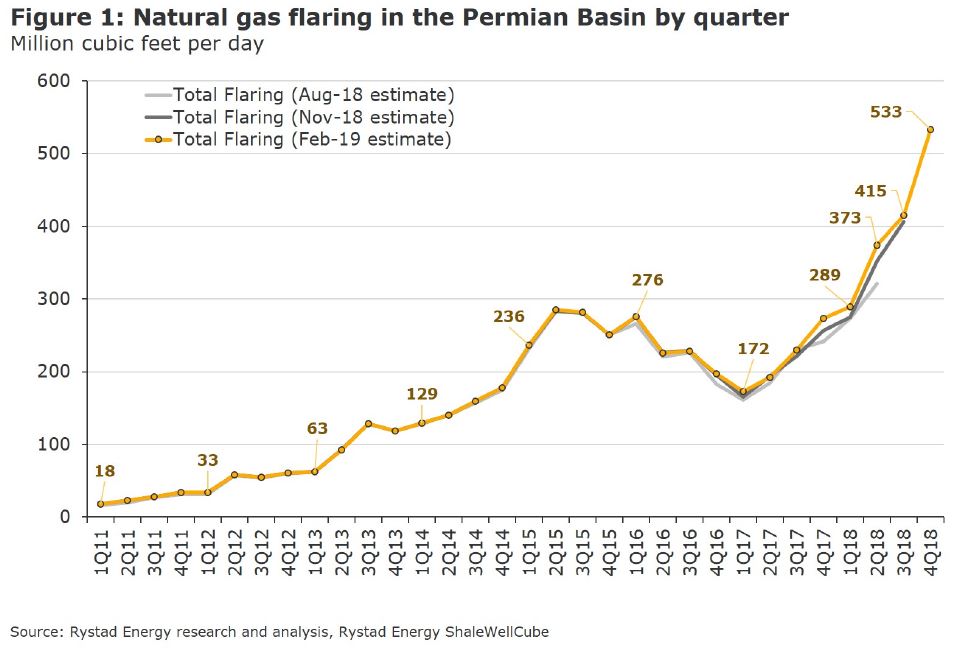
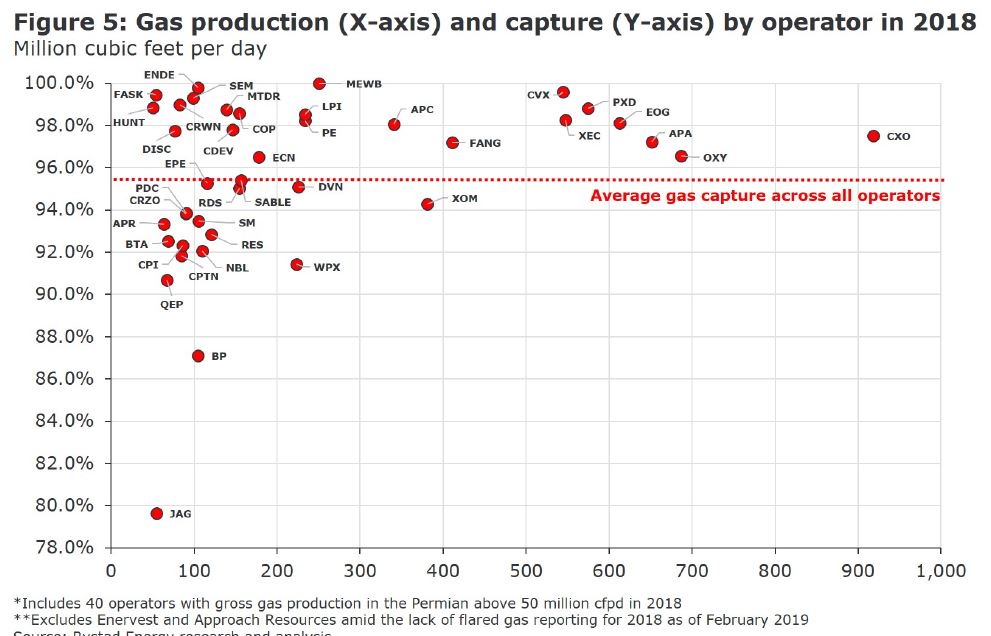
The Texas Tribune reported recently that Texas oil producers are increasingly flaring gas because of lack of pipeline infrastructure in areas such as the Eagle Ford Shale and Permian Basin. Flaring permits have risen from 107 in 2008 to 651 in 2011.  The RRC has called for increased regulation of flaring. http://myhighplains.com/fulltext?nxd_id=269702 

Increased drilling activity has also caused a headache for road maintenance across the country. States and counties are trying to figure out how to get the industry to help maintain and repair roads damaged by increased oil field traffic. http://www.businessweek.com/news/2012-05-15/taxpayers-pay-as-fracking-trucks-overwhelm-rural-cow-paths

The Texas Railroad Commission has limited public access to the portion of its website that allows for searches of well information between 8 am and 11 am. The RRC says that use of its site has grown beyond its capacity and is limiting its staff's ability to process permits and completion reports. It says it is working on the problem and hopes to have a solution in about 12 weeks. It is estimated that the RRC is about 12,000 behind in its processing of well completions.

Kinder Morgan has completed its $21 billion acquisition of El Paso Corp., making it the largest natural gas pipeline operator in the US.

The International Energy Agency has issued a report concluding that the shale gas boom in the US, and the substitution of gas for coal, have reduced CO2 emissions by almost 5 million tons in five years. During that time, coal use declined 19% and gas use jumped 38%. http://www.bizjournals.com/houston/morning_call/2012/05/shale-boom-has-led-to-lower-us.html

David Blackmon, director of govenmental affairs for El Paso Corp., recently told an energy conference audience what I have been saying all along -- that water pollution for oil and gas operations typically stems from wastewater and other spills on the surface rather than from hydraulic fracturing. http://www.ogj.com/articles/2012/05/el-paso-spokesman-calls-fracturing-controversy-misdirected.html

New developments in Range's battle with the Lispkys over alleged contamination of their water well have taken an interesting turn. District Judge Trey Loftin required Sharon Wilson, the Lispkys' consultant, to turn over emails she exchanged with the EPA and Lispky, and refused to dismiss Range's $3 million counterclaim. The Lispkys and Wilson alleged that the counterclaim violated Texas' SLAPP Act, the law prohibiting lawsuits intended to limit public participation in legitimate issues of public concern. The Lipskys have appealed that ruling. Judge Loftin has been criticized recently because he referred to the Range case in campaign materials that criticized the EPA's involvement in the Lispky matter. Critics contend that the campaign materials violate the state's code of judicial ethics. http://fuelfix.com/blog/2012/05/18/range-resources-sues-homeowner-over-youtube-of-flaming-well/

Meanwhile, three families in Washington County, Pennsylvania sued Range alleging that leaking impoundments caused contaminated water to get onto their properties and make them sick. http://www.post-gazette.com/stories/local/marcellusshale/shale-drilling-contaminated-water-families-say-in-lawsuit-637571/?p=0 And the Pennsylvania DEP is investigating complaints of methane contamination in three private water wells and two streams in Bradford County, near a Chesapeake well site. http://www.post-gazette.com/stories/local/breaking/methane-gas-found-in-three-wells-two-streams-637440/

The Alamo Area Council of Governments reported to the Texas Raiload Commission's Eagle Ford Shale Task Force that oil and gas activity around San Antonio could push that city ogver the federal government's limits for ozone. San Antonio is currently the nation's largest city in compliance with the EPA's ozone standards.

One of the newest shale plays is the Utica Shale in Ohio. State legislatures, concerned about use of fresh water for fracing, are considering legislaton to limit water withdrawals and sources. One producer plans to try out GasFrac Energy's process for using liquefied petroleum gas in place of water for fracing. Little is known about the success of the GasFrac technology. Last year Chevron tried it on several wells in the Pisceance Basin and said that the technology "significantly increases production while minimizing water usage." BlackBrush recently said it signed a two-year contract with GasFrac to use its technology in the Eagle Ford.  http://www.midwestenergynews.com/2012/05/15/waterless-fracking-technique-makes-its-debut-in-ohio/


April 30, 2012

EPA Region 6 Administrator Al Armendariz Resigned

Controversial EPA Administrator Al Armendariz has resigned his post as Administrator of Region 6, which includes Texas, after Senator James Inhofe (R-Okla.) called for an investigation of the EPA's actions related to oil and gas exploration. Armendariz was previously a professor at Southern Methodist University in Dallas. Prior to his appointment by the Obama administration he published a highly criticized study of air quality in the DFW area that found that oil and gas exploration in the Barnett Shale is a significant contributor to air pollution in that region. Since his appointment Armendariz has been a lightening rod for the exploration industry's criticism of the EPA.

In his remarks on the Senate floor, Senator Inhofe highlighted a talk given by Armendariz that was captured on video and recently posted to YouTube, in which he says that, because of the limited number of staff in his office, his approach is to act like the Romans: "They'd go into a little Turkish town somewhere, they'd find the first five guys they saw and they would crucify them. And then you know that town was really easy to manage for the next few years.". Inhofe also wrote a letter (Inhofe letter 04-26-12.pdf) to EPA Administrator Lisa Jackson, highly critical of Armendariz's actions. 

Armendariz was also responsible for the "emergency order" issued by his office against Range Resources for allegedly contaminating groundwater in Parker County -- an allegation since disproven. Recently, EPA voluntarily dismissed its suit seeking to enforce the emergency order, after the Texas Railroad Commission found that Range was not responsible for the methane in the contaminated water well.

April 3, 2012

News from the Oil Patch

EPA Dismisses Suit Against Range

The Environmental Protection Agency has thrown in the towel. It dismissed its suit against Range Resources that sought to enforce its emergency order claiming that Range was responsible for contamination of water wells in Parker County. See Bloomberg's article here.

I have previously written about this controversy. See my previous posts here and here and here and here and here. The EPA alleged that the water well belonging to the Lipskys had been contaminated with methane by Range's fracing of wells in the area. Range called a hearing at the Railroad Commission and invited the EPA and the Lipskys to attend, but they declined. The RRC found that Range's well was not the cause of the water well contamination; it concluded that the methane was naturally occurring and was caused when the water well was drilled too deep, into a shallow gas formation. Range fought the EPA's allegations vigorously. So far, the EPA has been unable to link any groundwater contamination to hydraulic fracturing.

The Lipskys also filed a civil suit against Range seeking damages -- a big mistake. Range got the Lipsky's case dismissed, on the ground that the RRC had already determined that Range was not at fault. Range filed a counterclaim against the Lipskys for defamation and to recover the costs of its litigation, and also filed a cross claim against the Lipskys' expert Alisha Rich, claiming that she conspired with the Lipskys to produce false evidence in the case. Those claims remain pending.

Horizontal Wells Now Have As Many As 20 Frac Stages

In 2003, the average number of frac stages for a horizontal well was four. (A "frac stage" is the process of using hydraulic fracturing in an isolated segment of a horizontal well, thus concentrating the pressure and energy in a limited portion of the formation.) Last year, the average number of frac stages was twenty. Lateral lengths have also increased dramatically. In 2003, the average lateral length in Tarrant County (the Barnett Shale) was 2,433 feet. In 2010, it was 3,599 feet. The standard length in the Eagle Ford is now a mile (5,280 feet), and some wells are being drilled to 8,000 feet or more.

GAO Says That Regulators Don't Have Sufficient Information to Ensure Safety of Gathering Lines

The US General Accounting Office has issued a report on the safety of gathering lines. Gathering lines are generally the pipelines that go from the well head to the transmission line. While transmission lines are heavily regulated by US and state regulators, gathering lines are for the most part unregulated. The GAO report says that:

state pipeline safety agencies cited construction quality, maintenance practices, unknown or uncertain locations, and limited or no information on pipeline integrity as among the highest risks for federally unregulated pipelines. Without data on these risk factors, pipeline safety officials are unable to assess and manage safety risks associated with these pipelines.

Coal Industry Struggles Because of Cheap Natural Gas

Bloomberg reports that Appalachian coal companies are in trouble because utilities are switching to cheaper natural gas:

For U.S. power utilities, who consumed 90 percent of the country's coal production in 2010, the prospect of relatively cheaper gas supplies now and in the foreseeable future has pushed them to switch some of their generation to gas-burning plants from units that use coal.

KNOC To Buy El Paso E&P Unit for $7.15 Billion

A consortium of companies including the Korea National Oil Company is buying El Paso Corp's exploration and production assets. Kinder Morgan previously acquired El Paso Corp. for $21 Billion and announced that it would sell its E&P business.

Valero and Chesapeake May Put CNG Pumps on Texas Highways

Valero and Chesapeake are negotiating to install natural gas fueling stations for vehicles on Texas roads. The Texas Commission on Environmental Quality has offered $4.5 million in grants to establish a triangle of CNG fuel stations between Houston, Dallas and San Antonio.

Eagleford Expands into Fayette County

Eagleford shale wells are being drilled in the southwestern part of Fayette County, expanding the north edge of the field. Nine wells have been drilled so far. Oil production from the Eagleford has climbed from 12,981 bbl of oil/condensate in 2006 to 55 million barrels in 2011. By comparison, oil production from the Bakken, Three Forks and Sanish shale plays in North Dakota, the other big oil shale area in the US, was 129 million barrels in 2011. EOG Resources' CEO Mark Papa predicted that oil shales could add another 1.5 million barrels/day of oil to US production by 2015.

Investor Groups Complain About Flaring of Gas

Thirty-six large institutional investors representing $500 billion in assets sent a letter to 21 E&P companies pushing them to disclose the amount of natural gas flared in connection with their oil shale production. Because of a lack of pipeline infrastructure and low gas prices, companies producing shale oil in North Dakota and Texas are flaring much of the gas produced from their wells. The investors claim that flared gas in North Dakota produced 2 million tons of carbon dioxide last year, the equivalent of 384,000 extra cars on the road. The investor group claims that, even with low natural gas prices, the state of North Dakota lost about $110 million in revenue last year from the flaring. Companies anxious to get oil flowing from their wells begin oil production before the necessary gas gathering and transmission lines are in place.

Petrochina Now Produces More Oil Than Exxon

The Associated Press reported last week that Petrochina, the Chinese national oil company, now produces more oil than Exxon and has become the world's largest oil producer. Petrochina announced that it pumped 2.4 million barrels a day last year, exceeding Exxon by 100,000 barrels. Exxon's output decreased 5.5% last year, while Petrochina's increased 3.3%.


January 16, 2012

Industry News

Recent news of interest:

The new Texas law requiring reporting of chemicals in frac fluids becomes effective February 1. The law also requires operators to report the volume of water used. Dr. Dan Hardin, resource planning director of the Texas Water Development Board, projects that in 2020, more than 40 percent of water demand in La Salle County (in the Eagle Ford Shale) will go toward fracing. http://www.nytimes.com/2012/01/15/us/new-texas-rule-to-unlock-secrets-of-hydraulic-fracturing.html

Last year, Dr. Robert Howarth, a professor at Cornell University, published an article concluding that natural gas causes more global warming per unit of energy created than coal, upsetting the widely published belief that natural gas is a more climate-friendly fuel. Dr. Howarth said that previous studies did not take into account that as much as eight percent of produced natural gas escapes into the atmosphere between the wellhead and its consumption. Now a colleague of Howarth at Cornell has published a study challenging Howarth's fugitive gas estimate. Dr. Lawrence Cathles concludes that gas has one-half to one-third the greenhouse gas footprint of coal.

The U.S. Energy Information Administration said that the average wellhead price for natural gas fell from $4.37 per MMBu in 2010 to $3.98 in 2011, the lowest since 2002. http://fuelfix.com/blog/2012/01/10/natural-gas-production-drives-price-down/ Cheap natural gas is making it hard for wind and solar projects to compete. http://blogs.desmoinesregister.com/dmr/index.php/2012/01/05/cheap-gas-a-threat-to-renewables/http://www.npr.org/2012/01/05/144526652/solar-panels-compete-with-cheap-natural-gas 

With low gas prices and high oil prices, rigs continued to move toward shale plays:


Baker Hughes Rig Count.jpg


NGI's shale rig count.jpg


2011 saw a record $86 billion in 2011 U.S. oil and gas upstream deals, up 15% from 2010 -- a year that was itself a record. Top deals in 2011: BHP Billiton's acquistion of Petrohawk, $15.1 billion; Kinder Morgan's acquisition of El Paso Corp, $7.2 billion; BHP Billiton's acquisition of Chesapeake's Fayeteville Shale properties, $4.75 billion; Statoil's acquisition of Brigham Exploration, $4.7 billion; Marathon's acquistion of Hilcorp Marcellus Shale interests for $3.5 billion. All of these deals were driven by shale plays. China's Sinopec oil company recently announced that it will pay $2.2 billion for a one-third stake in Devon Energy's plays in five shales in Mississippi, Colorado, Ohio, and Michigan. Oil & Gas Journal estimated that E&P spending will rise 9.3% this year to a record $595 billion.

In New York, the four-month comment period is closing on regulations proposed by the Department of Environmental Conservation for fracing. The DEC received more than 20,800 comments, a record. State Democratic leaders called on the governor to withdraw the proposed regulations and for a permanent ban on fracing. Industry lobbyists called the proposed regs excessively restrictive, inequitable and unjustified. The Independent Oil and Gas Association of New York claimed that the rules would render half of the desirable drilling parcels unuseable. Environmental groups are divided. The Sierra Club,the Natural Resources Defense Council and the Nature Conservancy have been working with regulators and the industry to come up with workable regulations, seeing natural gas as a cleaner "bridge fuel" for transition to renewable energy sources. Other local environmental groups are opposed to any regulations that would allow development of the Marcellus in New York. Clair Sandberg, a founder of Frack Action, called the cooperation between national environmental industry groups and industry a "marriage of convenience." "It was too daunting to try to take on coal and gas at the same time. Now they find themselves with a mutiny on their hands."

Reports continue to surface in Pennsylvania of methane contamination of water wells allegedly caused by fracing. The Pennsylvania Department of Environmental Protection cited Cabot (again) for contaminating three water wells in Lenox Township, citing inadequate casing. DEP is also investigating methane contamination in wells in Wyoming County, Pa. operated by Chief Oil & Gas. A Chief spokesman said that the levels of methane in the water matched levels found in the water before the wells were drilled.


December 30, 2011

Year in Review

I started writing this blog in February 2009. This is my 136th post. It's been fun. I had no idea I could find enough topics to write about, but material has not been a problem. A lot has changed in the oil and gas industry in the last three years. The development of unconventional shale plays. The BP oil spill in the Gulf. Falling gas prices. Rising oil prices. The "fracing controversy."

All of this news pales in comparison to my personal year-end tragedy: My secretary of 27 years is retiring.

I have looked back on my posts from the last year, and here are some parting thoughts for 2011:

Range Resources' fight with landowners in Parker County over alleged contamination of groundwater continues. The fight began in 2010 when the EPA issued an "emergency order" against Range, alleging that its Barnett Shale wells had charged landowners' groundwater supply with methane. Range has fought back fiercely. It appealed the EPA's order to the 5th Circuit court of appeals, and it called a Railroad Commission hearing, at which it presented extensive evidence showing that its wells were not the source of the methane in the landowners' water. The EPA and the landowners declined to participate in that hearing. Instead, the EPA filed suit in federal court to enforce its order. That court has stayed EPA's action until the 5th Circuit issues its opinion. The landowners also brought suit against Range in state court. Range filed a counterclaim, also suing the landowners' consultant Alisa Rich, alleging a conspiracy between the landowners, Rich and the EPA, and seeking damages for civil conspiracy and defamation.

Range's fight is one chapter in the larger controversy over hydraulic fracturing that continues to occupy the media. Most recently, the EPA issued a report concluding, after extensive study and testing of groundwater around Pavillion, Wyoming, that fracing is "likely" the cause of contaminated local water supplies. Every major media outlet picked up the story. Just Google Pavillion Wyoming to see the media frenzy. Encana, an operator in the Pavillion field, called for an independent review of the EP's findings and labelled the agency's report "irresponsible." The American Petroleum Institute and Wyoming regulators have also questioned the study's scientific soundness.

The EPA is continuing with its ponderous design of a study of fracing, mandated by Congress. Results of its study are not expected until 2013. The State of New York, which has imposed a moratorium on fracing, issued a draft environmental impact statement that contains a remarkably thorough study of alleged incidents of groundwater contamination and detailed recommendations of best practices to reduce risks to groundwater. Major studies have been done by several universities, including Duke and MIT, and the University of Texas is proposing its own study. The Department of Energy appointed an advisory panel to study the issue.

Meanwhile, the media continues its frenzied coverage of the "fracing controversy." A so-called documentary on the issue, Gasland, was even nominated for an Oscar.

The Texas Leglisature passed legislation requiring oil companies to post on the internet the chemical content of their frac fluid. The RRC has proposed rules implementing the new law. Similar legislation has been passed or is pending in other states.

The EPA has also issued proposed regulations to reduce emissions of contaminants into the air at all oil and gas facility sites, viewed by the industry as an attempt by EPA to extend is regulation of the industry.

The huge increase in gas supplies resulting from the shale boom has cause gas prices to decline further and companies to shift their exploration budgets to oil shale plays, including the Eagle Ford and the Barnett Shale oil "window" in Texas and the Bakken in North Dakota. Rigs drilling gas wells in Texas declined from 941 to 820 this year, and rigs drilling oil wells increased from 756 to 1,196. There are now 240 rigs drilling in the Eagle Ford alone. Meanwhile, the gas price has dropped to around $3.00/mmBtu, whereas the oil price has moved between $85 and $100/bbl.

The Texas Supreme Court issued several opinions of importance to royalty owners this year: In Shell v. Ross, BP v. Marshall, and Samson Lone Star v. Hooksthe court threw out landowners' jury verdicts against oil companies based on statutes of limitation. In FPL Farming v. Environmental Processing Systems, the court held that injection well operators could be held liable for subsurface trespass.  In Leslie v. Veteran's Land Board, the court appeared to reverse its prior rulings that the holder of executive rights has no duty to lease.  And in Texas Rice Land Partners v. Denbury Green Pipeline, the court said that pipeline companies must prove that they are in fact common carriers in order to exercise condemnation powers.

Meanwhile, oil companies keep leasing and drilling. The demand for energy will not soon abate. A happy new year to all.


October 28, 2011

News from the Oil Patch

Recent news of interest:

New York Times reporter Ian Urbina has a recent article claiming that lenders taking mortgages on real estate are restricting their borrowers from granting oil and gas leases on the mortgated property. The article also discusses whether the granting of a lease on mortgaged property might violate the terms of the mortgage. Urbina says Congressmen Ed Markey and Maurice Hinchey asked Fannie Mae and Freddie Mac how they deal with oil and gas leases on mortgaged property. Chesapeake said that they don't seek approval from lenders before acquiring leases on mortgaged property, but wait until they are ready to drill to ask the mortgage company to subordinate their lien to the mortgage.

In my experience in Texas, the standard practice has been for the oil company to lease the land first, then determine if it is mortgaged, and if so ask the lender to subordinate is lien. Lenders are generally agreeable, believing that, if a well is drilled, the value of their collateral will be enhanced, since they will still have a lien on the royalty interest reserved by their borrower. I recently learned, however, that Fannie Mae is requiring that its borrowers on commercial properties insert specific provisions in the lease before agreeing to the lease, as well as charging a substantial fee. On new leases of residential lots in the Barnett Shale, Chesapeake is sending a lender subordination form to the lot owner along with the lease and asking the owner to get their mortgagee's consent before paying for the lease.

The Booming Eagle Ford Shale

There are now 1,231 wells producing from the Eagle Ford Shale in South Texas, in 25 counties. Total production to date is more than 37 million barrels of oil/condensate and 311 Bcf of gas. The biggest counties are DeWitt, Karnes, Dimmit, Webb and La Salle.  DeWitt and Karnes Counties are the best oil producers so far. In DeWitt County, 99 Eagle Ford Wells have produced 6.8 million barrels, and the average peak month daily production was 555 barrels. Webb County is tops on Eagle Ford gas production, with 116 Bcf of gas to date, and an average initial production rate in the first month of 3.4 mmcf from 215 wells. As of last month, 238 rigs were running in the Eagle Ford play (compared to 115 in the Marcellus). Drilling in the Barnett Shale play, a gas play, has declined to its lowest level in seven years because of the low price of natural gas.

Eagle Ford.jpg


 Kinder Morgan Buys El Paso Corp. for $21 Billion

Kinder Morgan's acquisition will make it the largest operator of gas pipelines in the US and the fourth largest energy firm in North America. Kinder Morgan is reportedly planning to sell El Paso's exploration and production assets, for as much as $7 billion.

Brigham Exploration Sold to Statoil for $4.4 Billion

On the local front, in my home town of Austin, the two Brigham brothers have cashed in, selling their company for $4.4 billion to Norway's Statoil. The Brighams started their company here in Austin several years ago, taking in public, and recently acquired 375,00 acres on the Bakken and Three Forks plays in North Dakota and Montana. Brigham has already been sued by its shareholders, who say that Statoil's price of $36.50 per share is too low.

 RRC Eagle Ford Task Force Adopts "Advisements"

A task force appointed by the Commissioner David Porter of the Texas Railroad Commission has adopted "advisements" regarding construction of pipelines and roads in the area of the Eagle Ford Shale play. The task force was appointed in July to "open the lines of communication between all parties, establish best practices for developing the Eagle Ford Shale, and promote economic benefits locally and statewide."  The task force has twenty members:

  • Leodoro Martinez - Middle Rio Grande Development Council, Executive Director, Cotulla
  • Kirk Spilman - Marathon Oil, Asset Manager Eagle Ford, San Antonio
  • The Honorable Jaime Canales - Webb County Commissioner, Precinct 4, Laredo
  • Teresa Carrillo - Sierra Club, Executive Committee Member - Lone Star Chapter, Treasurer - Coastal Bend Sierra, Corpus Christi
  • James E. Craddock - Rosetta Resources, Senior Vice President, Drilling and Production Operations, Houston
  • Erasmo Yarrito - Texas Commission on Environmental Quality, Rio Grande Valley Water Master, Harlingen
  • Steve Ellis - EOG Resources, Senior Division Counsel, Corpus Christi
  • The Honorable Daryl Fowler - Dewitt County Judge, Cuero
  • Brian Frederick - DCP Midstream, Southern Unit Vice President for the East Division, Houston
  • Anna Galo - Vice President, ANB Cattle Company, Laredo
  • The Honorable Jim Huff - Live Oak County Judge, George West
  • Stephen Ingram - Halliburton, Technology Manager, Houston Business Development & Onshore South Texas, Houston
  • Mike Mahoney - Evergreen Underground Water Conservation District, General Manager, Pleasanton
  • James Max Moudy - MWH Global, Inc., Senior Client Service Manager, Houston
  • Trey Scott - Trinity Minerals Management, LTD, Founder, San Antonio
  • Mary Beth Simmons - Shell Exploration and Production Company, Senior Staff Reservoir Engineer, Houston
  • Terry Retzloff - TR Measurement Witnessing, LLC, Founder, Campbellton
  • Greg Brazaitis - Energy Transfer, Vice President, Government Affairs, Houston
  • Glynis Strause - Coastal Bend College, Dean of Institutional Advancement, Beeville
  • Susan Spratlen - Pioneer Natural Resources, Senior Director, Corporate Communications & Public Affairs, Dallas
  • Chris Winland - Good Company Associates; University of Texas at San Antonio, Interim Director, San Antonio Clean Energy Incubator, Austin/San Antonio
  • Paul Woodard - J&M Premier Services, President, Palestine

The task force adopted the following advisements regarding pipelines and roads.

Pipelines:

• Placement of pipelines should avoid steep hillsides and watercourses where feasible.

• Pipeline routes should take advantage of road corridors to minimize surface disturbance.

• When clearing is necessary, the width disturbed should be kept to a minimum and topsoil material should be stockpiled to the side for replacement during reclamation, accelerating successful revegetation.

• Proximity to buildings or other facilities occupied or used by the public should be considered, with particular consideration given to homes.

• Unnecessary damage to trees and other vegetation should be avoided.

• After installation of a new line, all rights-of-way should be restored to conditions compatible with existing land use.

Roads:

• Trucking companies partnering with the Texas Department of Public Safety to develop a program that would alert companies when their drivers receive moving violations or drivers license suspensions.

• Creation of road use agreements or trucking plans between operators and local authorities, including parameters such as:

1. Avoiding peak traffic hours, school bus hours, and community events.

2. Establishing overnight quiet periods.

3. Ensuring adequate off-road parking and delivery areas at all sites to avoid lane/road blockage.

The task force is supposed to meet monthly.


In the Marcellus:


  •  Democratic representatives in Ohio are calling for a moratorium on hydraulic fracturing in that state until the EPA completes its study of fracking.
  • ABC News reported that the Marcellus and Utica shale plays have created thousands of jobs in Ohio, causing people to flock to Steubenville, Ohio, which last year had an unemployment rate of 15%.
  • The Pennsylvania Department of Environmental Protection has told Cabot Oil & Gas that it can stop delivering water to residents of Dimock Township. Cabot was required to furnish water to residents after claims that its wells had contaminated groundwater there. The residents still have a pending case against Cabot.
  • Range Resources is challenging the constitutionality of a town's drilling ordinance in South Fayette, Pennsylvania as so strict as to prevent any drilling in the town, causeing a taking of Range's mineral rights. Range's action is being considered a test case on the limits of municipal regulation of drilling in Pennsylvania.
  • Companies are considering abandonment of their acreage in New York after reviewing that state's proposed rules on horizontal drilling and fracking.


October 10, 2011

Chesapeake's Aubrey McClendon

Christopher Helman has recently written two articles on Aubrey McClendon, CEO of Chesapeake Energy, one in the October 24 edition of Forbes, and one -- an interview with McClendon --  on Helman's blog. McClendon is the Steve Jobs of the US oil & gas exploration industry, in many ways the face of the industry. And he's not bashful about taking that role. Helman's articles provide a good summary of McClendon's and Chesapeake's meteoric rise and the controversies surrounding him and the industry.

Chesapeake has a market capitalization of $17 billion and is estimated to have $2 billion in profits on $9.5 billion in revenues this year. It has 12,000 employees and added 3,300 employees this year. The company has 4,500 land scouts acquiring oil and gas leases from Ohio to Pennsylvania to Michigan to South Texas. Chesapeake is expanding beyond the E&P business into the oilfield service industries. According to McClendon, it is the fourth-largest drilling company in the US, the second-largest compression company, and in the top three in oilfield trucking and tool rental. Chesapeake intends to spin off its oilfield services businesses next year into a new public entity.

McClendon's great uncle was Robert Kerr, founder of Kerr-McGee Oil & Gas and a goveronor of Oklahoma. At age 23, he partnered with Tom L. Ward to start Chesapeake, and it went public in 1993. Ward and McClendon parted ways in 2006, and Ward started his own company, SandRidge Energy. McClendon owns a huge wine collection that is served at his Oklahoma eatery the Deep Fork Grill. He recently sold his personal collection of antique maps to his company for $12 million. 

Now 52 years old but looking much younger, according to Forbes McClendon is worth $1.2 billion. He owns 2.5% of every well Chesapeake drills--interests now worth some $500 million. "You could say I'm the only CEO in America who truly participates alongside his company in the day-to-day business activity on the same basis as the company," he says. "Would we have had the financial collapse in 2008 if every CEO of a bank, of a mortgage company or a securities firm had been forced by his board to participate personally in some proportionate part of every loan made, every mortgage-backed security sold or every real estate deal financed by those firms?" In 2009 his Chesapeake compensation package was valued at $100 million, including $20 million in CHK stock.

Chesapeake is admired and hated in the industry. The company sweeps into each new play paying the highest prices for leases and gobbling up all acreage in sight. In the past five years the company has acquired 600,000 leases covering 9 million acres, paying $9 billion in bonuses. Chesapeake paid $1.7 billion for 700,000 acres in the Eagle Ford in 2010; then in November 2010 the company sold a one-third share of that acreage to China's state-owned oil company for $1.1 billion and an additional $1.1 billion in future drilling costs. Chesapeake has entered into similar agreements withe BP, Statoil and Total to lay off interests in its acreage.


Continue reading "Chesapeake's Aubrey McClendon" »