Articles Posted in Recent Cases

Published on:

There’s lots of buzz about a recent verdict in a case filed by a landowner in Dallas County alleging injuries from air emissions from drilling and production of Barnett Shale wells in Wise County. The case is Lisa Parr v. Aruba Petroleum, Cause No. 11-01650-E, in the County Court at Law No. 5 of Dallas County. The jury returned a verdict for personal injury and property damages of $2.9 million. According to the petition (Parr – 11th Amended Petition.pdf), Aruba had 22 wells within two miles of the Parrs’ 40 acres, including one within 800 feet.

CNN quotes the plaintiff, Lisa Parr, as saying that says she’s not opposed to the work oil companies do. She simply wants them to do their business responsibly.

“We are not anti-fracking or anti-drilling. My goodness, we live in Texas. Keep it in the pipes, and if you have a leak or spill, report it and be respectful to your neighbors. If you are going to put this stuff in close proximity to homes, be respectful and careful.”

Published on:

Last Friday I spoke on a panel at the E.E. Smith Advanced Oil and Gas Institute in Houston, discussing allocation wells. The segment was in the form of a debate, actually more like an oral argument. After an introduction of the topic by Bob Goldsmith, Bryan Lauer with Scott Douglas presented the case for the legality of allocation wells, and I presented the case for their illegality. We discussed the precedential value of Browning Oil v. Luecke and Humble Oil v. West and the challenges to allocation wells in the Klotzman proceeding before the Texas Railroad Commission and in Spartan v. EOG, now pending in district court in Harris County.

I can now report that EOG and the Klotzman family have reached a settlement in the Klotzmans’ challenge of an allocation well permit on their lands. So the Railroad Commission’s authority to issue the Klotzman allocation well permit will not be decided by a District Court in Travis County.

Here is a recent article in the Texas Tech Law Review about allocation wells.

Published on:

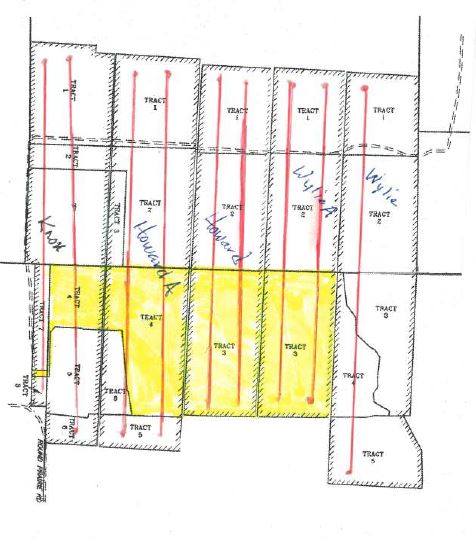
I recently have learned of a suit brought by landowners against EOG Resources involving “allocation wells,” of which I have written before. The case is Spartan Texas Six Capital Partners, Ltd., Spartan Texas Six-Celina, Ltd., and Dion Menser v. EOG Resources, Inc., Cause No. 2011-27476, in the 11th Judicial District Court of Harris County.  Although the case is in Harris County, it involves wells drilled by EOG in Montague County. The EOG wells are shown on the sketch below; the plaintiffs’ tract is in yellow:


Spartan v. EOG.JPG

EOG filed pooled unit designations for the Knox, Howard, Howard A, and Wylie A units, even though the plaintiffs’ leases did not allow pooling. EOG then calculated the plaintiffs’ royalties based on the portion of each well’s lateral length located on plaintiffs’ tract – allocation based on lateral length. I understand that most companies drilling allocation wells calculate royalties owed on non-pooled tracts on this lateral-length yardstick.

I have reviewed some of the pleadings in the Spartan case, including a motion for partial summary judgment filed by EOG last month. EOG asks the court to rule that “royalties in this case should be based on a reasonable allocation of the total production attributable to the lands covered by the [plaintiffs’] leases,” citing Browning Oil Company, Inc. v. Luecke, 38 S.W.3d 625 (Tex.App.-Austin 2000, pet. denied).

Published on:

Last week, the Fourth Court of Appeals in San Antonio issued its opinion in Chesapeake v. Hyder.pdf, on gas royalties owed to the Hyder family for production in Johnson and Tarrant Counties, in the Barnett Shale. The court upheld a judgment against Chesapeake for more than a million dollars, including $250,000 in attorneys’ fees. The result is not surprising considering the language in the lease, but the case is interesting because it reveals Chesapeake’s structure for marketing of gas in the Barnett Shale, obviously designed to reduce its gas royalty obligations.

The principal issue on appeal was whether Chesapeake could reduce the Hyders’ royalty by the amount of transportation costs paid by Chesapeake to unrelated pipeline companies. The trial court and court of appeals held that it could not. As I have written before (here, here and here), deductibility of post-production costs is a continuing issue for gas royalty payments in Texas. Prior Supreme Court cases have held that such costs are deductible under most standard gas royalty clauses.

The Hyders’ royalty clause was not a standard lessee-form lease. It provided:

Published on:

Julia Trigg-Crawford, a landowner in Lamar County, has asked the Texas Supreme Court to hear her case arguing that TransCanada has no right to condemn her property for the Keystone XL Pipeline.  The Crawford Family Farm Partnership v. TransCanada Keystone Pipeline, L.P., No. 13-0866. Although other segments of the pipeline await federal approval, the segment from Oklahoma across Texas has now been completed and is in operation.  Crawford lost her case in the trial court and the Texarkana Court of Appeals, 409 S.W.3d 908, and has asked the Supreme Court to review the case. The Supreme Court asked TransCanada to reply to Crawford’s petition, and Texarkana filed its reply on February 6. 

Crawford’s argument is that Texas law does not grant eminent domain powers to interstate pipelines.  TransCanada argues that Crawford’s appeal presents the same issues as Rhinoceros Ventures Group, Inc. v. TransCanada Keystone Pipeline, L.P., 388 S.W.3d 305 (Tex. App.–Beaumont 2012, pet. denied), which the Supreme Court declined to review.

Crawford has become a symbol of opposition to the Keystone pipeline, drawing national attention to her cause.

Published on:

The Klotzman mineral owners have appealed the Texas Railroad Commission’s order granting EOG a permit to drill an “allocation well” on their land. A copy of the petition can be viewed here: Klotzman Petition.pdf. Our firm represents the Klotzmans.  For my previous posts about allocation wells and the Klotzman case, search for “allocation well” in the site’s search engine.

Published on:

The San Antonio Court of Appeals recently decided a case illustrating the new kinds of issues that can arise from the drilling of horizontal wells.

In Springer Ranch v. Jones, Alice Burkholder owned a ranch, 8,545 acres in La Salle and Webb Counties. She signed a single oil and gas lease on the ranch in 1956 that has been maintained by produciton. When she died, Alice left the ranch to her husband for life, and thereafter in three separate tracts to her three children.  In effect, by her will she partitioned the ranch, surface and minerals, into three tracts, subject to the oil and gas lease.  Alice’s husband died in 1990, and thereafter the three children signed a contract agreeing on how royalties on production from the lease should be divided among them. The contract provided that all royalties under the lease “shall be paid to the owner of the surface estate on which such well or wells are situated, without reference to any production unit on which such well or wells are located.”

The lessee drilled a horizontal well located partly on one of the ranch tracts, now owned by Springer Ranch, and partly under a different tract now owned by Rosalie Sullivan. The surface location of the well was on the Springer Ranch tract.  Springer Ranch argued that, because the surface location was “situated on” its property, it should receive all royalties from the well. Rosalie Sullivan argued that royalties from the well should be allocated between the two tracts based on each tract’s part of the productive lateral of the well.  The trial court agreed with Ms. Sullivan, and the court of appeals affirmed. It construed the parties’ agreement to to allocate royalties on the basis of the percentage of the productive interval of the wellbore on each party’s tract, not on the basis of the well’s surface location.

Published on:

On December 20, the Office of Inspector General of the Environmental Protection Agency issued its “Response to Congressional Inquiry Regarding the EPA’s Emergency Order to the Range Resources Gas Drilling Company.”  The report was requested by Congress as a result of an emergency order issued by the Dallas regional office of the EPA against Range Resources on December 7, 2010. That order required Range to take certain actions based on EPA’s finding that Range’s wells in the Barnett Shale were the likely source of contamination of water wells in Parker County.

I have written about Range’s saga before.  EPA sued Range to enforce its emergency order. Range disputed and fought the EPA order, suing in the U.S. Court of Appeals to get the order revoked. Range called a hearing before the Texas Railroad Commission (in which EPA did not participate), after which the RRC found that Range’s wells were not the source of the gas in the water wells. One of the well owners, the Lipskys, sued Range in state court for damages;  Range countersued, contending that the Lipskys had falsified evidence and defamed the company. The district court found that Lipsky had created a “deceptive video” that was “calculated to alarm the public into believing the water was burning.” The Lispkys have appealed to the Texas Supreme Court, where their case remainds pending.

Read more here: http://www.star-telegram.com/2012/02/17/3744111/owner-of-contaminated-water-well.html#storylink=cpy
Published on:

StateImpact Texas has published a series of good articles about the growing evidence that the huge quantities of wastewater being injected in the Barnett Shale field are causing earthquakes — some of sufficient intensity to cause significant damages. Lawsuits have been filed in Johnson County to recover for the damage.  StateImpact’s most recent article can be found here. Links to all of StateImpact’s articles on earthquakes caused by oil and gas activity are here.

Published on:

   Suppose that the fluids injected into a disposal well migrate beyond the boundary of the tract where the well is located; does that incursion of the injected fluids into and under the neighbor’s property constitute a trespass?  Until recently, this question had never been addressed by a Texas appellate court, and the assumption in the disposal industry was that such incursion was not actionable. The Beaumont Court of Appeals, in FPL Farming Ltd. (“FPL”) v. Environmental Processing Systems, L.C. (“EPS”), concluded that the neighbor does have a trespass claim. 

  The Beaumont Court of Appeals has issued two opinions in the case; the first was appealed to the Supreme Court which reversed and remanded to the Court of Appeals, and the second has also been appealed to the Supreme Court, where it is now pending. FPL Farming Ltd. v. Environmental Processing Systems, L.C., 305 S.W.3d 739 (Tex.App.-Beaumont), reversed and remanded 351 S.W.3d 306 (Tex. 2011), on remand 383 S.W.3d 274 (Tex.App.-Beaumont May 24, 2012, pet. filed 1/18/13).  

  The facts in FPL are these:  EPS operates an injection well for non-hazardous waste on land adjacent to the land owned by FPL. FPL previously objected to an amendment of EPS’s permit that increased the rate and volumes allowed to be injected. The Austin Court of Appeals affirmed the permit amendment over FPL’s objections, ruling that “the amended permits do not impair FPL’s existing or intended use of the deep subsurface.” FPL Farming Ltd. v. Tex. Natural Res. Conservation Comm’n, 2003 WL 247183 (Austin 2003, pet. denied).

Contact Information